
For many people, the idea of spending a night in a sleep center can feel intimidating. Questions about comfort, privacy, and what will actually happen often create anxiety before the appointment even begins. The good news is that modern sleep testing is designed to be safe, noninvasive, and as comfortable as possible.
If you’ve been scheduled for an evaluation and are wondering what to expect during a sleep study, this guide will walk you through the entire experience—from arrival to results—so you can feel confident and prepared.
Why a Sleep Study Is Recommended
Sleep specialists recommend overnight testing when symptoms suggest an underlying sleep disorder that cannot be diagnosed through questionnaires or daytime exams alone. Issues like disrupted breathing, abnormal movements, or unusual brain activity often occur only during sleep and require detailed monitoring.
A structured sleep lab evaluation allows clinicians to observe these patterns in a controlled environment, providing accurate data to guide diagnosis and treatment.
Before You Arrive: How to Prepare
Preparation is simple and focuses on keeping your routine as normal as possible. Most patients are advised to:
- Avoid caffeine or alcohol in the afternoon and evening
- Wash hair and avoid styling products
- Bring comfortable sleepwear and personal toiletries
- Take prescribed medications unless told otherwise
You may also be asked to complete sleep questionnaires that help your care team understand your symptoms and sleep habits ahead of time.
Arrival at the Sleep Center
When you arrive in the evening, you’ll be welcomed by a trained sleep technologist who will guide you through the process. You’ll be shown to a private room designed to feel more like a hotel room than a medical facility.
This is the beginning of the sleep study process, which focuses on creating a calm, relaxed setting so your sleep is as natural as possible.
Setting Up the Monitoring Equipment
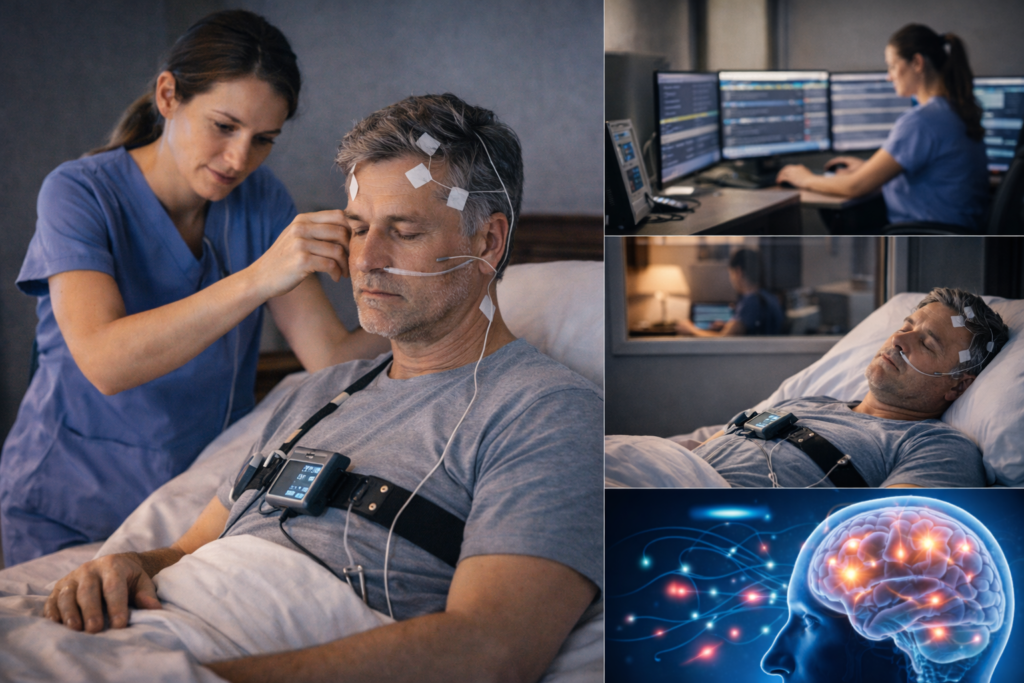
Before bedtime, small sensors are placed on your scalp, face, chest, and legs using gentle adhesive. These sensors do not cause pain and are designed to record physiological signals while allowing movement during sleep.
The setup helps collect data for a comprehensive sleep disorder test, measuring:
- Brain activity
- Eye movement
- Heart rate
- Breathing patterns
- Oxygen levels
- Muscle activity
Once everything is connected, you’ll have time to relax, read, or watch TV before going to sleep.
Going to Sleep: What the Night Is Like
One of the most common concerns is whether it’s possible to fall asleep while being monitored. While it may feel unfamiliar at first, most people do fall asleep—often faster than expected.
During the night, the technologist monitors signals from another room and can assist if you need to get up or adjust equipment. This type of overnight sleep test captures how your body functions across different sleep stages.
Importantly, you are never left unattended, and privacy is always respected.
What Is Being Measured While You Sleep
Throughout the night, the data collected helps specialists identify disruptions that may not be noticeable during waking hours. This includes breathing pauses, frequent awakenings, or abnormal movements.
All of this information is part of a comprehensive sleep study, which provides a detailed picture of how your body behaves during rest.
Morning Wake-Up and Discharge
In the morning, the technologist gently removes the sensors, and you’re free to go home and continue your day. There is no recovery time needed, and most people return to work or daily activities immediately.
The recorded data is then reviewed and interpreted by a sleep specialist, a crucial step in determining next steps.
After the Study: Understanding Your Results
Your results are not given immediately because the data requires careful analysis. During a follow-up appointment, your provider will explain the findings, discuss whether a sleep disorder has been identified, and recommend treatment options if needed.
This personalized approach ensures that testing leads to meaningful improvements in sleep and overall health.
Common Concerns First-Time Patients Have
Many patients worry about:
- Not being able to sleep
- Feeling uncomfortable with sensors
- Being watched while sleeping
These concerns are completely normal. Fortunately, most patients report that the experience is far easier than expected and appreciate having answers about their sleep.
Conclusion
A sleep study is a powerful diagnostic tool designed to uncover the root causes of sleep-related symptoms in a safe and supportive environment. Knowing what the process involves can ease anxiety and help you approach the experience with confidence. With accurate data and expert interpretation, sleep testing becomes the first step toward better rest, improved health, and a higher quality of life.