

Spring is supposed to feel like a reset. The days get longer, the weather softens, and everything starts looking a little more alive. So if you are waking up tired, dragging through the afternoon, or feeling like your brain never fully clocks in, it can be frustrating. You might even wonder why you feel worse when the season is supposed to make you feel better.
The truth is, spring can quietly create the perfect storm for daytime fatigue. Pollen counts go up, nasal congestion gets worse, sleep gets lighter, and your body works harder overnight than you realize. On top of that, many people blame stress, a busy schedule, or changing routines without realizing their sleep may not be as restorative as it should be.
At New Mexico Sleep Labs, this is one of the most common concerns people bring up in the spring. They are sleeping “enough,” at least on paper, but still waking up drained. That gap matters more than people think.
Spring tiredness is not always “just allergies”
It is easy to assume seasonal allergies are only a daytime problem. Most people think about sneezing, itchy eyes, sinus pressure, or feeling foggy during the day. But allergies can also interfere with how you breathe at night, how often you wake up, and how deeply you sleep.
When your nose is congested, your body may shift into lighter, more fragmented sleep. You may toss and turn more often, breathe through your mouth, or wake up briefly without remembering it the next morning. That can leave you with non restorative sleep, where you technically spent hours in bed but your body never got the recovery it needed.
That is why spring exhaustion can feel so confusing. You may not be pulling all-nighters. You may not be sick. You may not even notice waking up much. Still, your body can be losing out on the deeper stages of sleep that help with energy, focus, mood, and physical recovery.
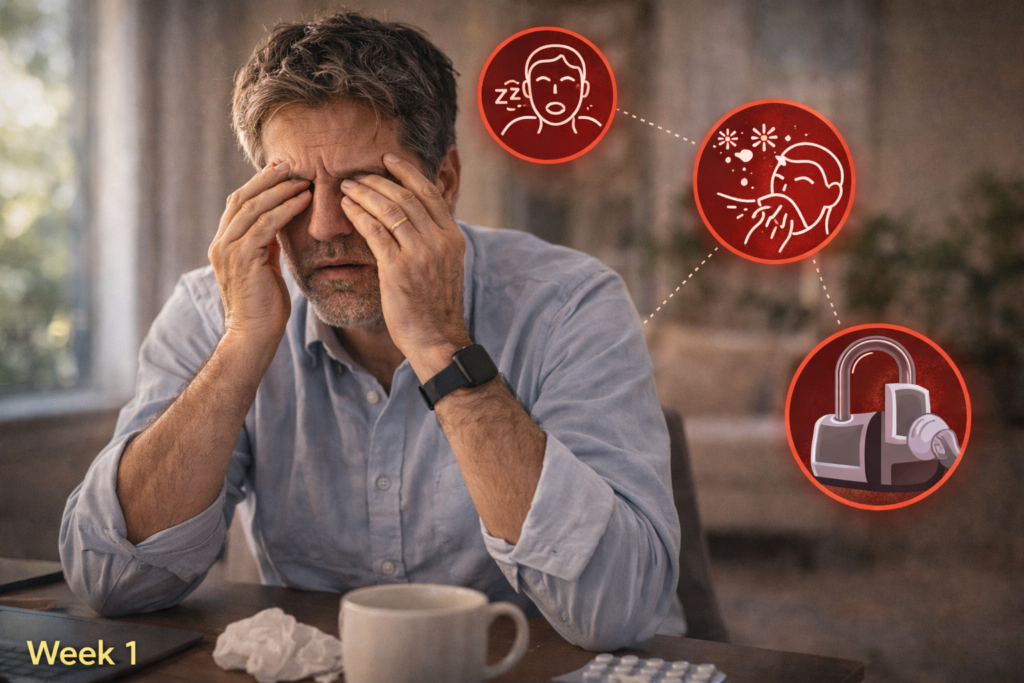
When tired starts feeling like something more
There is a difference between feeling a little sluggish and dealing with excessive daytime sleepiness. One feels like a temporary slump. The other can feel like your body is constantly asking for sleep no matter how long you stayed in bed the night before.
This can show up in ways like:
- Struggling to stay alert during meetings or while reading
- Wanting naps more often than usual
- Feeling unfocused behind the wheel
- Needing caffeine just to feel functional
- Hitting an energy wall in the middle of the day
If that sounds familiar, it is worth paying attention. Spring allergies may be part of the story, but they are not always the full explanation.
Sleep is not only about how many hours you get
A lot of people think sleep problems are simple math. If you get seven or eight hours, you should feel fine. But in real life, it is not that straightforward. The bigger issue is often sleep quality vs sleep duration.
You can spend a full night in bed and still feel awful the next day if your sleep is repeatedly interrupted. Brief awakenings, breathing changes, congestion, discomfort, and restless sleep can all chip away at the value of those hours. This is especially common during seasonal changes, when routines shift and allergy symptoms become harder to ignore.
A good question to ask yourself is not only “How long am I sleeping?” but also “How well am I sleeping?” That one shift in perspective can help explain a lot.
Allergies can hide the real problem
Sometimes, spring symptoms make it easier to miss what is actually going on. Congestion, headaches, low energy, and trouble concentrating can all get blamed on pollen. But those same complaints can overlap with sleep disorders symptoms, especially when they keep showing up even after allergy treatment or better habits.
A few signs that your tiredness may deserve a closer look:
- You sleep through the night but never feel refreshed
- Your partner notices loud snoring or restless breathing
- You wake up with dry mouth or morning headaches
- You feel mentally foggy almost every day
- Your energy drops even when your schedule is normal
These patterns do not automatically mean you have a sleep disorder, but they do suggest something deeper may be affecting your rest.
Why spring can make existing sleep issues more noticeable
If you already had mild sleep disruption during the winter, spring may be the season when it finally becomes impossible to ignore. Longer daylight hours can change your sleep timing. Warmer nights can make sleep feel lighter. Allergy-related inflammation can affect breathing. Even small routine changes, like later dinners or more social activity, can add up.
That is why some people suddenly start searching for the causes of chronic fatigue around this time of year. They feel like their energy dropped out of nowhere, when in reality a few overlapping issues have been building quietly for months.
Common contributors can include:
- Seasonal allergies that increase congestion overnight
- Fragmented sleep from stress or discomfort
- Breathing-related sleep disruption
- Inconsistent bedtimes and wake times
- A sleep environment that no longer feels comfortable
In many cases, the issue is not one dramatic problem. It is a chain reaction of smaller ones.
What better sleep can actually look like
When people think about fixing their sleep, they often jump straight to melatonin, blackout curtains, or going to bed earlier. Those things may help in some situations, but they are not always enough if the real issue is happening while you are asleep.
A better approach starts with noticing patterns.
Ask yourself:
- Do I wake up tired even after what should be a full night?
- Am I more congested at bedtime or overnight?
- Do I feel worse during allergy season every year?
- Has anyone mentioned snoring, gasping, or restless sleep?
- Do I feel like I am running on low battery most afternoons?
These questions matter because they shift the focus from “I am tired” to “Why is my sleep not restoring me?” That is where real answers usually begin.
Small changes that may help this spring
If your fatigue seems tied to seasonal changes, a few simple adjustments may improve how you feel:
- Shower before bed to reduce pollen exposure
- Keep bedroom air clean and cool
- Wash bedding more often during high-pollen weeks
- Try to maintain a steady sleep schedule
- Avoid heavy meals and alcohol too close to bedtime
- Pay attention to any breathing changes at night
These steps can support better rest, but they should not be treated like a permanent fix if your symptoms keep returning. If tiredness is becoming part of your daily life, it is worth taking seriously.
When it is time to stop guessing
A lot of adults spend months trying to explain away their fatigue. They say it is stress. They say it is allergies. They say it is just part of getting older or being busy. Sometimes that is true. But sometimes your body is telling you that sleep has become less effective than it should be.
That is where a professional evaluation can make a real difference. Instead of guessing, you can start understanding what is happening during the night and why your mornings feel so hard. The goal is not just more sleep. The goal is better rest that actually leaves you feeling like yourself again.
At New Mexico Sleep Labs, the focus is on helping patients connect the dots between their symptoms, their sleep patterns, and the reasons they may still feel worn out. Spring may be the season that exposes the problem, but the right support can help you address it in a much clearer way.
Final Thoughts
If you feel unusually drained every spring, do not assume you just have to push through it. Feeling tired all the time is not something you should have to normalize. Sometimes the issue is seasonal, sometimes it is behavioral, and sometimes it points to a deeper sleep-related concern. The important thing is paying attention early, especially when your body keeps telling you something is off.
Getting real rest can change more than your mornings. It can improve your focus, mood, patience, productivity, and overall quality of life. And that is always worth looking into.