
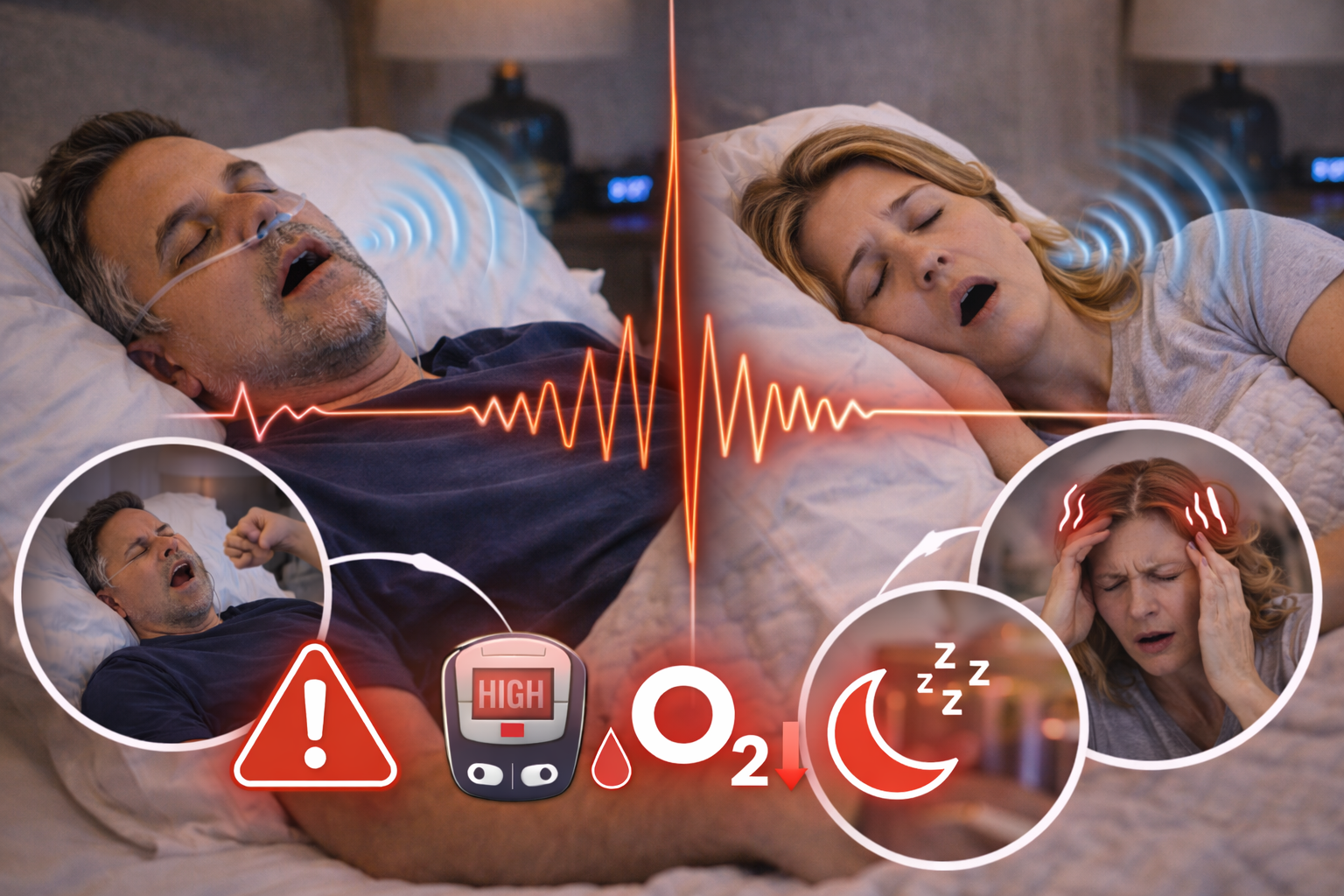
A lot of people still think sleep apnea is easy to spot. They imagine someone who snores loudly, stops breathing in the middle of the night, and wakes up obviously exhausted. Sometimes it does look like that. But not always.
In real life, obstructive sleep apnea symptoms can be surprisingly easy to overlook, especially when they show up differently from one person to the next. Some people assume their sleep is “not great” but do not realize there may be a real reason behind it. Others dismiss the signs because they have gotten used to feeling tired, foggy, or unfocused during the day. And in many households, the person sleeping next to them notices the problem long before they do.
At New Mexico Sleep Labs, this is one of the most common patterns people describe. They do not always come in saying, “I think I have sleep apnea.” More often, they say things like, “I never wake up feeling rested,” or “My partner keeps complaining about my snoring,” or “I feel drained even when I get enough hours.” That is what makes this conversation so important. The signs are often there, but they do not always look obvious at first.
Why sleep apnea gets missed so often
Part of the problem is that sleep apnea does not always fit the stereotype people expect. Yes, loud snoring can be part of it. Yes, daytime fatigue can be part of it too. But the bigger issue is what happens during sleep when the airway repeatedly narrows or collapses, making normal breathing harder than it should be.
That repeated disruption can pull the body out of deeper, more restorative sleep over and over again. The person may not fully wake up each time, and they may not remember anything unusual the next morning. But the body still feels the effect. That is why someone can spend a full night in bed and still feel like sleep somehow did not count.
It also helps explain why sleep apnea is often confused with stress, burnout, aging, or just being “bad at sleeping.” The symptoms can blend into everyday life so gradually that people normalize them without realizing it.
The signs are not always dramatic
A lot of adults expect sleep apnea to feel extreme, but many warning signs are more subtle than that. Sometimes the issue starts with restless sleep, morning headaches, dry mouth, or feeling mentally slow during the day. Sometimes it shows up as irritability, low motivation, or a constant need for caffeine just to function normally.
Common warning signs can include:
- Loud or frequent snoring
- Waking up tired after what should have been enough sleep
- Morning headaches
- Dry mouth or sore throat after waking
- Daytime sleepiness or brain fog
- Trouble focusing during meetings, reading, or driving
- Restless sleep with frequent tossing and turning
- Waking up suddenly feeling short of breath
Not everyone experiences the same pattern, which is why so many cases go unnoticed for longer than they should.
Understanding snoring vs sleep apnea
This is where a lot of confusion starts. Snoring and sleep apnea are related, but they are not the same thing. The difference between snoring vs sleep apnea matters because one is a sound, while the other is a breathing disorder.
Snoring happens when air moves through a narrowed airway and causes tissue to vibrate. Sleep apnea involves repeated interruptions in breathing during sleep. A person may snore without having sleep apnea, but snoring can also be one of the clues that something more serious is happening.
That is why it helps to look at the bigger picture instead of focusing on noise alone. If snoring comes with exhaustion, headaches, gasping, or sleep that never feels refreshing, it deserves more attention.
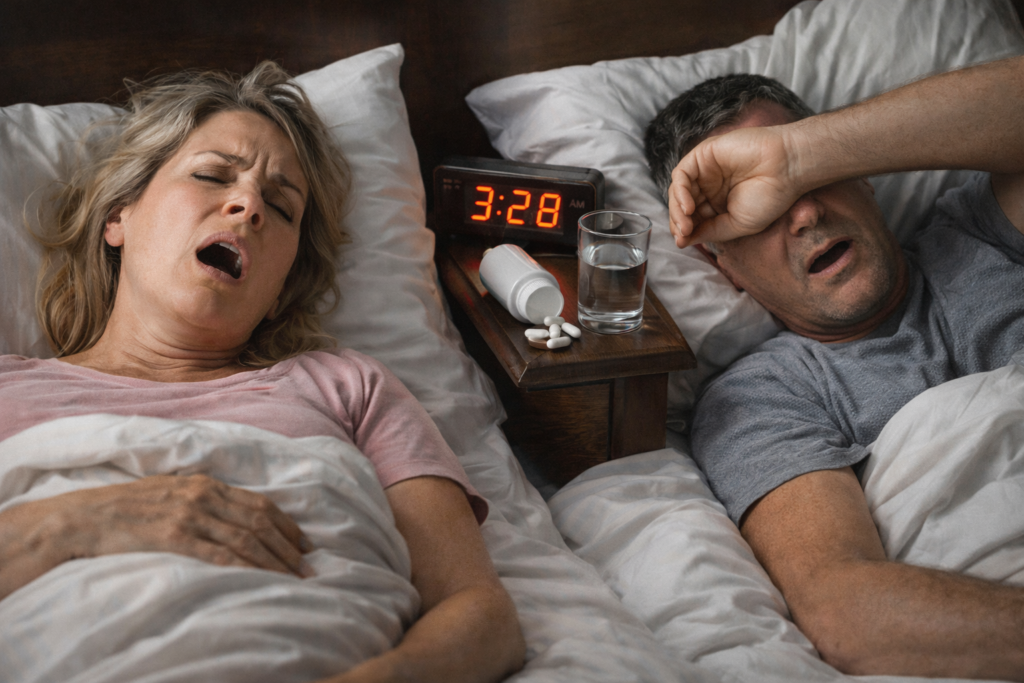
So, is snoring a sign of sleep apnea?
Sometimes yes, but not automatically. That question comes up all the time because so many people know they snore and are not sure what it actually means. The better answer is that snoring can be a warning sign, especially when it is frequent, loud, or paired with other symptoms.
A few details make snoring more concerning:
- It happens most nights of the week
- It is loud enough to disturb a partner
- It is followed by gasping, choking, or pauses in breathing
- The person wakes up feeling unrefreshed
- Daytime tiredness keeps getting worse
So while not every snorer has sleep apnea, it is worth paying attention when snoring starts to come with a pattern of poor sleep and low daytime energy.
Looking at the causes of loud snoring
Not all loud snoring comes from the same source. Sometimes it is related to nasal congestion, allergies, sleeping on the back, or alcohol close to bedtime. In other cases, the airway may be narrowing more significantly during sleep, which raises more concern.
That is why it is helpful to think about the causes of loud snoring as a spectrum. On one end, there are temporary or situational triggers. On the other, there may be a sleep-related breathing issue that keeps interfering with rest night after night.
Snoring becomes more important to evaluate when it is:
- Consistent instead of occasional
- Getting louder over time
- Paired with choking sounds or breathing pauses
- Linked with daytime fatigue or brain fog
- Resistant to simple changes like sleep position adjustments
When those pieces start lining up, it makes sense to stop brushing it off as “just snoring.”
Women and men may notice different patterns
One reason sleep apnea gets missed is that women and men do not always describe it the same way. Men may be more likely to report obvious snoring or witnessed breathing pauses. Women may be more likely to describe fatigue, poor sleep, mood changes, insomnia-like symptoms, or waking up feeling anxious or unrested.
That difference matters because people often expect the problem to look only one way. If it does not match the stereotype, they may never connect their symptoms to a possible sleep disorder.
Either way, the important thing is not whether the symptoms look textbook. It is whether sleep feels restorative and whether breathing is staying steady throughout the night.
Paying attention to sleep apnea risk factors
Symptoms matter, but context matters too. Certain patterns can raise the likelihood that sleep apnea is part of the picture, which is why it is useful to consider sleep apnea risk factors along with how someone feels.
These can include:
- A history of loud snoring
- Waking up gasping or choking
- Carrying extra weight around the neck or upper body
- Family history of sleep apnea
- Nasal obstruction or airway narrowing
- High levels of daytime sleepiness
- Morning headaches or dry mouth
Having a risk factor does not confirm anything on its own. But when risk factors and symptoms show up together, it becomes much easier to see why an evaluation may be worth it.
Why people ignore sleep snoring for too long
One of the biggest reasons people wait is simple: they get used to it. Over time, sleep snoring becomes background noise in the household. The person snoring assumes it is normal. Their partner may complain, joke about it, or start sleeping in another room. Everyone adapts, and the real issue keeps going.
The problem is that poor sleep has a way of creeping into everything else. Energy drops. Focus gets worse. Mood gets shorter. Mornings feel harder. People may blame stress or age without realizing their nights are not actually restful.
That is why paying attention earlier matters. You do not need to wait until things feel severe to take a pattern seriously.
What evaluation and snoring treatment options can look like
A lot of adults assume the only next step is some dramatic or uncomfortable solution, so they avoid getting checked altogether. But understanding the problem comes first. Once the cause is clearer, the right plan makes a lot more sense.
Possible snoring treatment options depend on what is actually happening. For some people, simple changes may help, like improving sleep position, addressing nasal congestion, or making bedtime habits more sleep-friendly. For others, the issue may involve airway obstruction that needs more structured treatment.
The key point is this: treatment should match the reason behind the symptom. That is why guessing is often less helpful than getting a clearer picture of what is going on during sleep.
At New Mexico Sleep Labs, the goal is to help people move from frustration and uncertainty to actual answers. When sleep has become noisy, unrefreshing, or physically draining, it is worth finding out why.
Final Thoughts
A lot of people live with poor sleep for years because the warning signs never seem dramatic enough to take seriously. But when mornings feel heavy, energy stays low, and nighttime breathing does not seem steady, those patterns are worth noticing. You do not have to wait until the problem feels extreme to pay attention.
Better sleep starts with recognizing when something is off. And sometimes, the signs that seem easy to dismiss are the ones that matter most.